
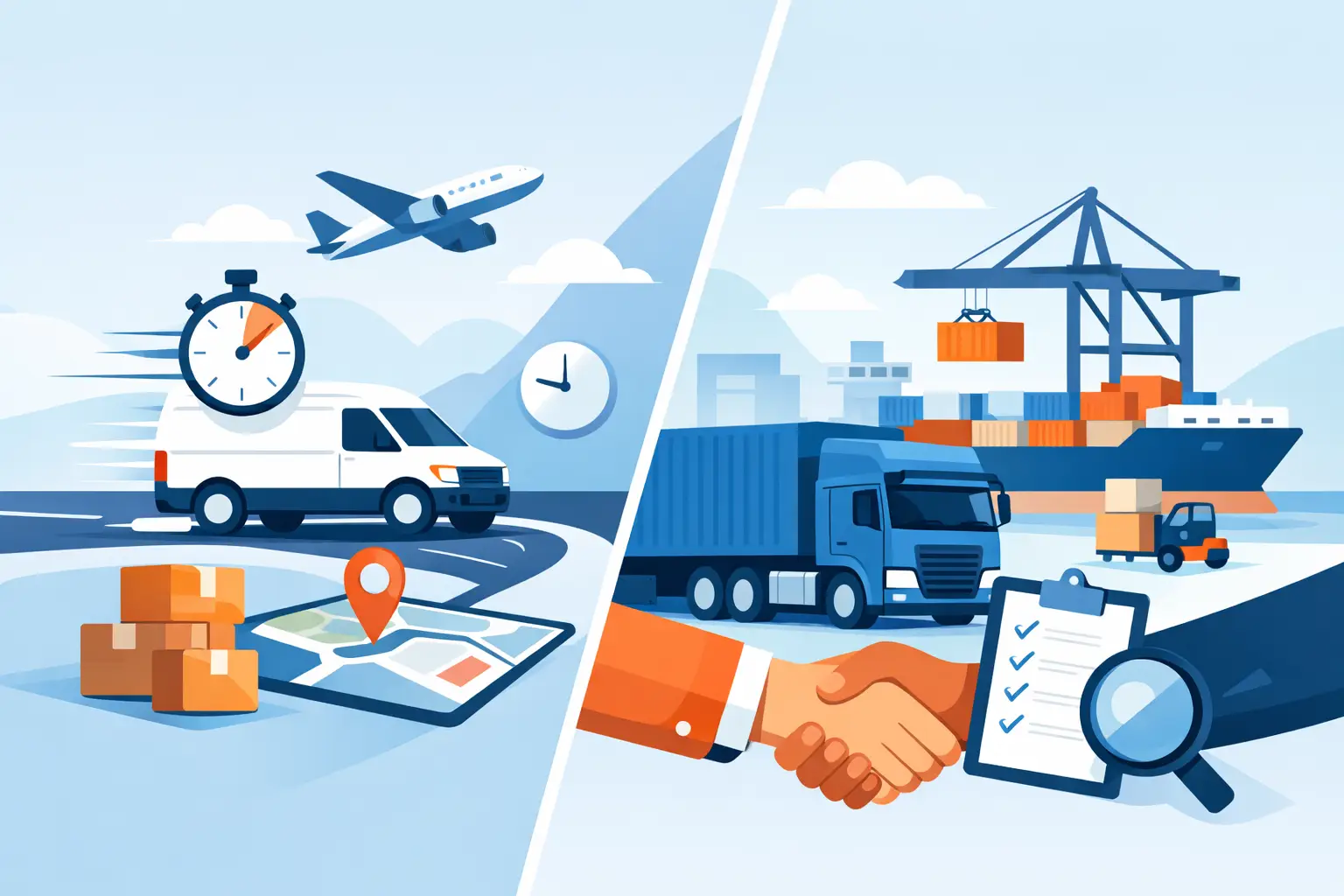
A production-critical part is sitting at a Houston supplier. The receiving site needs it tonight, the shutdown clock is running, and a standard pickup window will not solve the problem. In an expedited shipping vs freight brokerage decision, the right answer depends on more than transit speed. It comes down to control, equipment requirements, security access, freight complexity, and how much coordination the move requires.
For time-sensitive freight, choosing the wrong service model can add avoidable handoffs, missed delivery windows, and uncertainty when the shipment needs a clear plan. Expedited service and freight brokerage can both be valuable. They simply solve different operational problems.
What Expedited Shipping Is Built to Do
Expedited shipping is direct transportation for freight that cannot wait for a normal pickup schedule, consolidation cycle, or multi-stop route. A dedicated vehicle is dispatched for your shipment, typically moving from pickup to delivery with minimal or no unrelated freight in between.
This is the practical choice when a missed delivery creates a larger cost than the transportation rate. Common situations include emergency replacement parts, field equipment, critical documents, jobsite materials, medical or specialized supplies, and components needed to keep an industrial operation moving.
The defining feature is control. The shipment is assigned to a vehicle and driver with a specific mission: pick up, move, and deliver according to the agreed plan. That makes expedited transportation especially useful when you need a tight pickup window, direct communication, active status updates, or a delivery time that cannot be treated as an estimate.
Dedicated Equipment Changes the Outcome
Not every urgent load has the same requirements. A small package may need a courier vehicle. A larger, heavy, or awkward shipment may require hot shot hauling, a cargo van, a straight truck, or a trailer. Freight needing added protection may benefit from air ride equipment to reduce vibration during transit.
Equipment selection matters because the fastest available vehicle is not always the right vehicle. Dimensions, weight, securement needs, loading conditions, delivery access, and protection requirements should be confirmed before dispatch. A direct run only helps if the freight arrives intact and can be received without delay.
For regulated or restricted facilities, driver credentials can matter just as much as equipment. TSA and TWIC clearance may be necessary for access to ports, industrial sites, secure facilities, or controlled areas. If access is not considered at booking, a truck can arrive on time and still be unable to complete the delivery.
What Freight Brokerage Is Built to Do
Freight brokerage is a coordination service. A broker works with a network of qualified carriers to find capacity and arrange transportation that matches the shipment’s lane, equipment needs, timing, and budget.
Rather than dispatching one company-owned or directly managed vehicle for every move, brokerage expands the available carrier base. That is useful for freight moving across long distances, loads requiring specialized equipment, recurring shipments on changing lanes, or situations where a shipper needs options beyond one local fleet.
A capable broker manages the moving parts: carrier sourcing, rate negotiation, dispatch coordination, pickup and delivery communication, and exception management. The value is not simply finding a truck. It is finding an appropriate carrier and keeping the shipment organized from tender through delivery.
Brokerage Provides Reach, Not Always Direct Control
Brokerage can be the stronger option when capacity is the central challenge. A shipper may need a flatbed, step deck, dry van, temperature-controlled service, oversize equipment, or a carrier positioned near an out-of-state pickup. A brokerage network makes it possible to source those capabilities without maintaining separate carrier relationships for every scenario.
The trade-off is that the broker is coordinating a carrier rather than executing every mile with a dedicated local driver. Communication can still be strong, but the service model includes another operational layer. For a shipment that must move immediately, needs pickup within a narrow window, or requires constant control from a known dispatch team, a direct expedited option may be cleaner.
That does not mean brokerage is slow. A broker can arrange urgent transportation and locate expedited capacity when the right carrier is available. The difference is in how the move is built. Expedited shipping starts with dedicated execution. Freight brokerage starts with carrier coordination and capacity sourcing.
Expedited Shipping vs Freight Brokerage: The Real Decision Points
The first question is simple: what happens if this shipment is late? If the answer involves downtime, a stopped crew, a missed project milestone, a critical repair, or an expensive access window, dedicated expedited transportation is usually worth serious consideration. Its higher rate reflects priority dispatch, direct movement, and reduced exposure to schedule changes.
The second question is whether your freight requires a specific type of equipment or a broad geographic carrier search. If the shipment is specialized, moving outside your usual service area, or needs a carrier type not immediately available, brokerage can provide the wider reach needed to secure a workable solution.
The third question is how much shipment oversight you need. For a same-day Houston-area run, a hot shot move to a jobsite, or an urgent interstate delivery, direct dispatch can provide faster decisions and fewer communication gaps. For planned freight across multiple lanes, brokerage may offer better flexibility and access to market capacity.
Budget also matters, but it should be evaluated against operational risk. The least expensive rate is not automatically the lowest-cost decision. A lower-priced shipment that arrives after a shutdown, misses a crane appointment, or fails a required delivery window can cost far more than a dedicated vehicle would have.
When Expedited Transportation Is the Better Fit
Expedited transportation is generally the better fit when urgency and control are the primary requirements. Choose it when the freight needs to move now, the delivery window is firm, the load needs a direct run, or the receiving location has strict access requirements.
It is also a strong fit when visibility matters. With a dedicated move, there is less ambiguity around where the freight is, what stop comes next, and who is accountable for the delivery. That operational clarity is valuable when a procurement team, site supervisor, warehouse manager, and customer are all waiting for the same shipment.
For local and regional time-critical work, direct service can reduce the time spent searching for capacity and explaining the urgency to multiple parties. A dispatch team that understands hot shot operations, secure site access, and specialized handling can move from quote to pickup quickly.
When Freight Brokerage Is the Better Fit
Freight brokerage is often the better fit when the shipment is important but not necessarily a direct, immediate dispatch. It works well for planned loads, long-haul freight, ongoing lane coverage, equipment-specific moves, and situations where the best carrier may be outside a single provider’s available fleet.
It can also support companies managing variable shipping demand. Instead of relying on one equipment type or one coverage area, the shipper gains access to a broader set of carrier options. This is useful when volume changes, pickup locations shift, or freight requirements vary from one project to the next.
The key is to give the broker complete information upfront. Accurate freight dimensions, weight, pickup and delivery hours, commodity details, equipment needs, security requirements, and deadline expectations help prevent avoidable rework. Brokerage works best when the carrier search is based on real operating conditions rather than assumptions.
Use the Service Model That Protects the Shipment
There is no universal winner between expedited shipping and freight brokerage. One provides priority, dedicated execution when minutes and control matter most. The other provides carrier reach and coordination when capacity, equipment variety, or lane coverage is the larger challenge.
Advanced Express Delivery can support both urgent direct transportation and brokered freight solutions, allowing shippers to match the service to the real risk of the move. Start with the delivery deadline, freight requirements, site access, and cost of delay. Then choose the transportation plan that gives your team the best chance of getting the shipment delivered right the first time.
Leave a Reply