
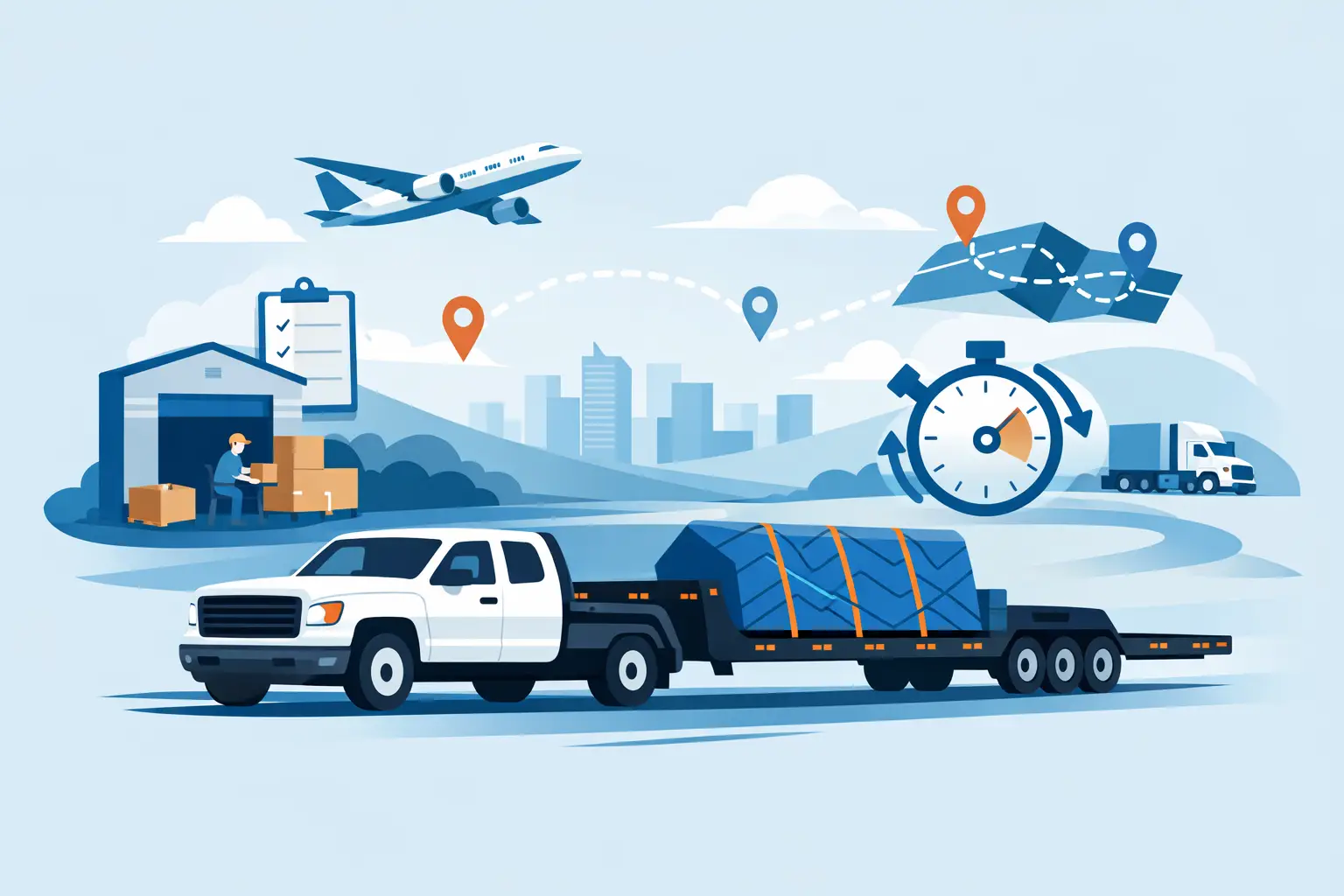
When a production line is waiting on a part, a rig is down, or a delivery window is measured in hours instead of days, standard freight is usually the wrong tool. That is exactly where how dedicated hot shot transport works becomes relevant. It is built for urgent, direct, shipment-specific moves where speed, control, and execution matter more than filling a trailer around a broad route.
What dedicated hot shot transport actually means
Dedicated hot shot transport is a time-sensitive freight service where a truck and driver are assigned to one shipment and one customer move. The freight is picked up and taken directly to delivery with minimal stops, no terminal handoffs, and no delay caused by waiting to consolidate other loads.
That dedicated piece matters. In general expedited freight can still involve network decisions, transfer points, or shared equipment depending on the carrier and shipment profile. Dedicated hot shot service strips that out. The vehicle is committed to the load, and the route is built around the delivery requirement.
This is why the service is common in industrial, manufacturing, energy, medical supply, and project-based shipping environments. If the cost of downtime, a missed appointment, or a line shutdown is high, paying for dedicated movement is often the practical choice.
How dedicated hot shot transport works from dispatch to delivery
The process starts with a real operating question, not a generic quote request. What is moving, when is it ready, where does it need to go, how fast does it need to arrive, and does it require special handling, secure site access, or a specific trailer type? Those details shape the dispatch plan.
Once the shipment is confirmed, the carrier assigns equipment that fits the load rather than trying to force the load into what is already available on a route. That may be a pickup with a flatbed, a gooseneck, a cargo van, a straight truck, or a trailer with air ride if the freight needs more protection in transit. The point is direct fit and immediate availability.
After dispatch, the driver moves to pickup as a dedicated unit. Freight is loaded, secured, and documented for the trip. Because this service is built around urgency, communication usually stays active from pickup through delivery. Shippers want status, updated ETAs, and confirmation that the move is still on track.
From there, the truck runs the shipment straight through based on hours-of-service limits, route conditions, and delivery requirements. There is no waiting for a hub sort, no linehaul transfer, and no stop sequence built for other customers. Delivery is made directly to the consignee, often with proof of delivery turned around quickly so the shipper can close the loop internally.
That is the operating core of how dedicated hot shot transport works. It is not complicated in theory. The value comes from disciplined execution, equipment fit, and the ability to respond fast without losing control of the shipment.
Why businesses use dedicated hot shot service
Most companies do not use this service because it is convenient. They use it because the alternative creates a larger cost.
In manufacturing, a single delayed component can interrupt a production schedule that affects labor, throughput, and customer commitments. In oil and gas, field operations may be waiting on replacement parts or tools with crews already on the clock. In distribution, a missed deadline can trigger chargebacks, project delays, or strained customer relationships. In regulated or restricted environments, the issue is not only speed but also whether the carrier has the credentials to access the site without friction.
Dedicated hot shot transport helps solve those problems because it gives the shipper control over timing. The freight is not being absorbed into a larger freight network with competing priorities. It moves because that one shipment is the priority.
When hot shot transport is the right fit
The best use case is a shipment that is urgent, important enough to justify dedicated equipment, and sized appropriately for fast response. That can include critical parts, project materials, replacement components, industrial supplies, or high-priority freight that cannot sit until the next standard pickup cycle.
Distance is flexible. Some moves are local and need to happen across Houston or surrounding industrial corridors the same day. Others are regional or long-distance and need a direct run across state lines. The deciding factor is usually not mileage alone. It is the delivery consequence if the shipment arrives late.
There are limits, and this is where experienced dispatch matters. If freight is oversized, highly specialized, or better suited to a full truckload operation with different permit requirements, hot shot may not be the best answer. If the load is not especially urgent, standard LTL or truckload can be more cost-effective. The service works best when the urgency is real and the shipment profile matches the equipment.
Equipment, credentials, and handling all affect the move
A lot of people think hot shot service is only about speed. Speed matters, but capability matters just as much.
The wrong equipment creates delays before the truck ever leaves. Weight, dimensions, tie-down requirements, weather exposure, ride sensitivity, and dock or site constraints all have to be considered up front. A shipment that needs air ride should not be treated like basic commodity freight. A delivery going into a port, refinery, or secured facility may require TWIC or other credentials. Airport-related freight may involve TSA-compliant handling requirements depending on the shipment and chain of custody.
That is why experienced carriers ask operational questions early. They are not slowing down the process. They are preventing avoidable failure points. Fast service without proper screening is how shipments get rejected at pickup, delayed at entry points, or damaged in transit.
What affects transit time and price
Dedicated hot shot pricing is usually higher than standard freight on a per-mile basis, but that comparison misses the real calculation. The shipper is paying for dedicated capacity, immediate dispatch, direct transit, reduced handling, and a lower chance of delay. If a late part costs far more than the freight charge, the rate is justified.
Several factors affect pricing and transit time. Distance is one. Equipment type is another. The size and weight of the shipment matter, along with whether the move is after-hours, weekend, or holiday. Pickup complexity can add time, especially at industrial facilities with security protocols, loading restrictions, or paperwork requirements. Delivery appointments and site access conditions also influence how quickly the load can complete.
Weather, traffic, and driver hours are part of reality too. A reliable carrier will move fast, but not by pretending these constraints do not exist. The better approach is clear communication and a dispatch plan that accounts for them before the shipment starts moving.
How dedicated hot shot transport works best for B2B shippers
The service performs best when the shipper provides clean information and the carrier responds with a workable plan. That means accurate dimensions, ready times, contact names, site requirements, and any handling instructions that could affect loading or delivery.
On the carrier side, execution means more than sending a truck. It means confirming fit, dispatching quickly, keeping visibility tight, and solving problems before they become missed deadlines. For businesses managing downtime exposure or strict delivery windows, that level of control is the service.
This is where a provider with expedited experience brings value. Companies like Advanced Express Delivery are built around urgent transportation, so the service model is designed for direct response, specialized handling, and shipments that cannot drift through a standard freight process.
Common misunderstandings about dedicated hot shot service
One common mistake is assuming hot shot always means the cheapest fast option. It usually is not. It is a premium service because the carrier is dedicating equipment and capacity to one move.
Another is assuming all urgent freight should move hot shot. Not always. If the load is better suited to another expedited mode, or if brokerage support can secure a more effective capacity option, that may be the better operational call. Good logistics is not about forcing every shipment into one service type. It is about matching the shipment to the right execution model.
The last misunderstanding is that speed alone guarantees success. In practice, success comes from dispatch discipline, equipment fit, communication, and the ability to handle site-specific requirements without losing time.
If your shipment cannot wait for standard scheduling, dedicated hot shot transport gives you a direct path from pickup to delivery with fewer variables in between. When the cost of delay is high, that kind of control is not a luxury. It is a practical way to keep your operation moving.