
A failed pump, gearbox, drive assembly, or control component can stop an entire operation. When the replacement is already located, the next question is how to move critical machine parts without adding damage, delays, or confusion to an already urgent situation. The right answer is not simply to book the first available truck. It is to match the shipment’s size, sensitivity, security requirements, and delivery deadline to a transport plan that can execute.
For industrial teams, every hour matters. A part that arrives late, arrives damaged, or arrives without the required paperwork can extend downtime and put crews, schedules, and customer commitments at risk.
Start With the Part, Not the Truck
Before selecting a vehicle or carrier, identify exactly what is moving. Weight and dimensions are only the beginning. A machine part may have exposed shafts, precision-machined surfaces, electrical connections, fluid ports, irregular lifting points, or a center of gravity that is nowhere near the middle of the crate.
Confirm whether the part is loose, palletized, crated, skid-mounted, or housed in a reusable transport frame. If it is not packaged, determine who is responsible for preparing it for transit. A carrier can provide the right equipment, but unprotected precision components can still be damaged by shifting, vibration, weather exposure, or improper securement.
Provide accurate shipment details before dispatch: pickup and delivery addresses, ready time, dimensions, weight, commodity description, piece count, loading method, and receiving requirements. A clear description lets the transportation provider assign equipment that fits the job instead of making last-minute changes at the dock.
How to Move Critical Machine Parts Without Damage
Critical parts need protection from three common risks: movement, impact, and vibration. The protection method depends on the component. A heavy steel housing may need different handling than a calibrated instrument panel or a precision spindle.
Securement should keep the freight from moving in every direction, not just from sliding forward. Blocking and bracing, rated straps, chains, edge protection, and properly built crating all have a role. The goal is to distribute force safely without placing pressure on sensitive surfaces, fittings, or housings.
For components that are vulnerable to road vibration, an air-ride trailer can be the better choice. Air ride does not replace correct packaging or securement, but it can reduce the shock transferred through the trailer compared with a standard suspension. That difference can matter for sensitive assemblies, electronics, and parts with tight tolerances.
Weather is another consideration. If a part cannot be exposed to rain, dust, or road debris, confirm that it will travel in an enclosed vehicle or under suitable protection. Do not assume a tarp solves every problem. Moisture can still reach freight, and loose coverings can create abrasion or safety issues in transit.
Verify lifting and loading requirements
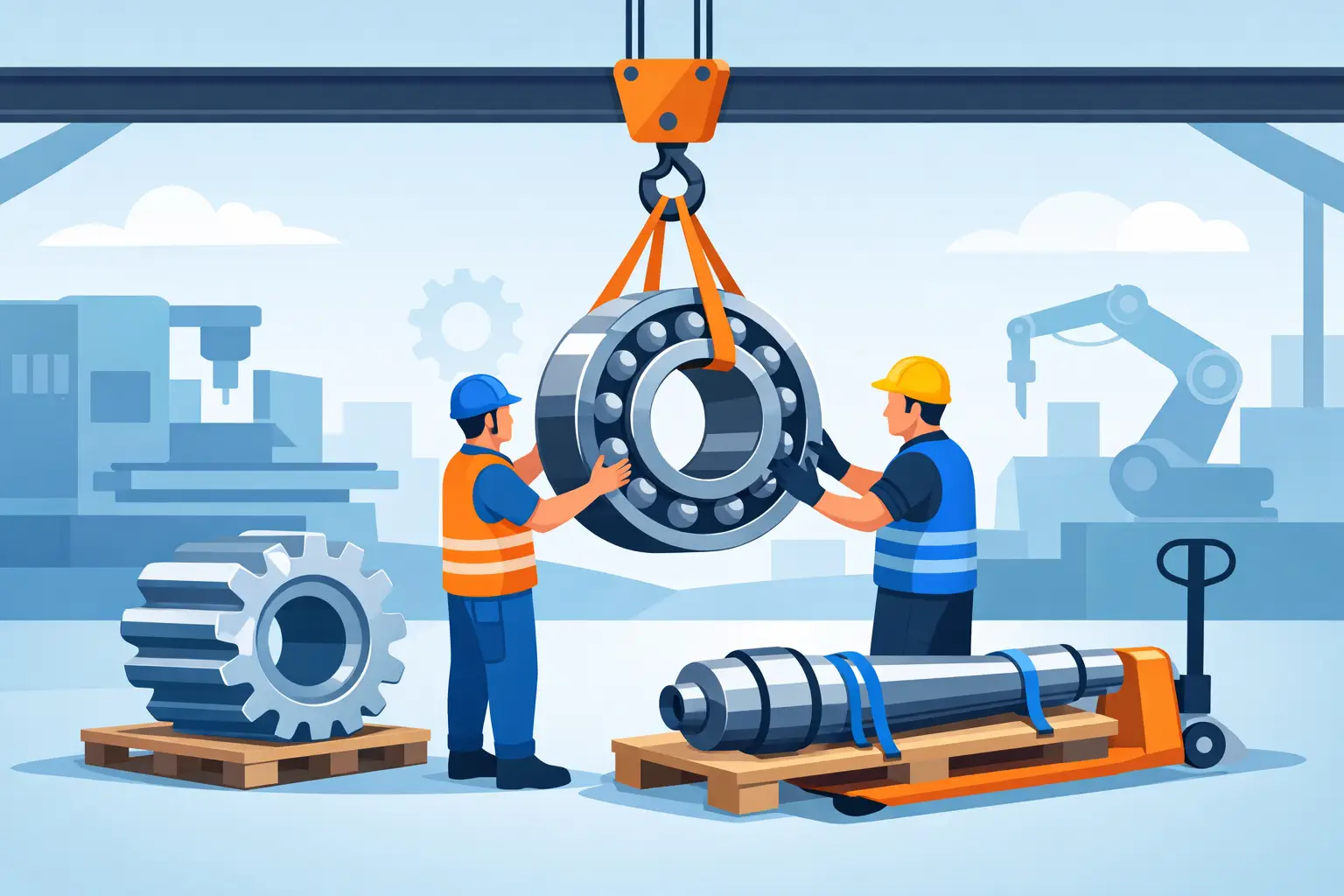
Loading is often the highest-risk point in the move. Confirm whether the pickup location has a dock, forklift, crane, overhead hoist, loading ramp, or personnel qualified to operate the equipment. The same confirmation is needed at delivery.
Send lifting instructions when available. This is especially necessary when a part has designated lifting lugs, a nonstandard center of gravity, or restrictions on where forks or straps can contact it. If equipment must be supplied, arrange it before the vehicle arrives. A hot shipment can lose hours when a driver reaches the location and finds there is no safe way to load or unload.
Choose Transportation Based on Urgency and Risk
The lowest freight rate is rarely the deciding factor when a machine is down. The right service level depends on the consequence of delay, the distance, the freight profile, and whether the shipment must travel direct.
For a local or regional emergency, dedicated hot shot transportation can keep the part moving without terminal transfers or shared-freight delays. A dedicated vehicle gives the shipment priority and gives the shipper a direct point of control from pickup through delivery.
For longer-distance moves, expedited freight may be necessary when production cannot wait for standard transit times. Depending on the lane and size of the part, that can mean a dedicated truck, team service, coordinated air cargo, or a managed brokerage solution that sources qualified capacity quickly.
There is a trade-off. Dedicated and expedited services generally cost more than standard freight, but they reduce handling points and uncertainty. For a component tied to a shutdown, that transportation premium can be far less than the cost of lost production, idle labor, missed project milestones, or emergency repairs.
Build a Chain of Custody
Critical machine parts should not disappear into a generic pickup queue. Assign a clear chain of custody from the moment the part is released until the receiving team signs for it.
That starts with named contacts at both ends. The pickup contact should be able to authorize release, verify the piece count, and answer loading questions. The receiving contact should know the expected arrival window, have access to the site, and be ready with the equipment and personnel needed to unload.
Document the shipment condition before loading. Photos of the part, packaging, labels, and securement are useful, particularly for high-value components or parts with existing wear. Record serial numbers where applicable and make sure shipping documents match the actual freight.
For regulated, secure, or restricted-access facilities, confirm credential requirements in advance. A driver may need specific site access, identification, or security clearance to enter and deliver. Credentials such as TSA and TWIC clearance can be valuable when a shipment must move through controlled industrial or transportation environments, but they should be verified against the facility’s requirements before dispatch.
Keep Communication Active During Transit
An urgent move needs more than a pickup confirmation. Operations, maintenance, procurement, and receiving teams need current information so they can plan labor and restart activity as soon as the part arrives.
Set the required communication points before the shipment leaves. At minimum, the shipper should receive confirmation that the freight was picked up, notice of any meaningful delay, and delivery confirmation. For a time-critical move, more frequent updates may be appropriate, especially when the receiving crew is waiting on site.
Be precise about delivery windows. “Deliver today” is not enough when a crew is scheduled around the part. State whether the delivery must occur by a specific time, whether after-hours service is available, and whether the site has restrictions on truck access, gate entry, or unloading.
A reliable transportation provider will communicate problems early. Traffic, weather, road closures, mechanical issues, and facility delays can happen. The difference is whether the carrier has a contingency plan and alerts the customer while there is still time to act.
Avoid the Shortcuts That Create Delays
The most expensive mistakes usually happen before the truck rolls. Incorrect dimensions can result in unsuitable equipment. Missing pickup instructions can leave a driver waiting at the gate. Weak packaging can turn a fast delivery into a damage claim.
Avoid booking based on price alone when the part is operationally critical. Also avoid assuming that any carrier can handle securement, sensitive freight, controlled sites, or urgent direct delivery. Ask how the freight will be loaded, protected, secured, monitored, and delivered.
If the shipment involves multiple stops, cross-docking, or a transfer between modes, understand where handoffs occur and who is accountable at each point. Every additional touchpoint can add risk. Sometimes the fastest plan is a direct vehicle. Other times, a coordinated brokerage solution provides the coverage or equipment needed for a longer lane. The right choice depends on the actual deadline and freight requirements.
Plan Before the Next Breakdown
The best time to arrange emergency transportation is before the next critical component fails. Keep current dimensions, weights, packaging requirements, serial number records, pickup contacts, receiving instructions, and after-hours access details for high-priority parts.
Advanced Express Delivery supports urgent industrial freight moves with dedicated hot shot service, expedited transportation, freight coordination, and equipment options for shipments that need added protection. For Houston-area operations, having a responsive transportation plan ready can turn a production emergency into a controlled recovery.
When a critical machine part is needed, speed matters. But controlled speed matters more. Give the shipment the equipment, securement, communication, and direct accountability it requires, and your team can focus on getting the operation back online.
Leave a Reply