
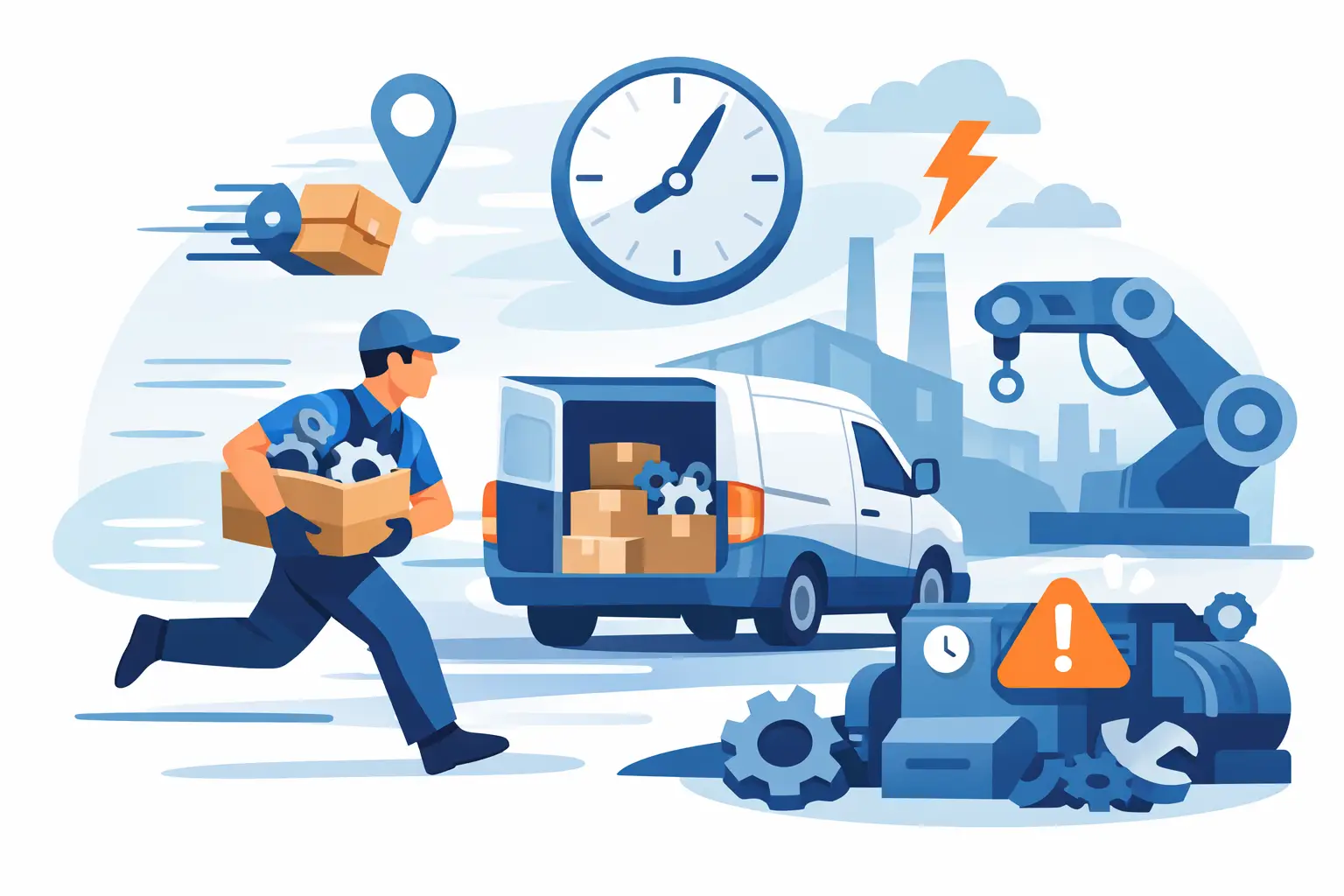
A failed pump, control component, or replacement assembly can stop an entire operation while the clock keeps running. An emergency parts delivery service is built for that moment: getting the needed part picked up, protected, and delivered without routing it through a standard freight schedule.
For industrial teams, maintenance departments, procurement managers, and field operations, the real cost is rarely the shipping charge alone. It is lost production, idle crews, missed service commitments, and a repair window that keeps getting wider. Emergency transportation should reduce that exposure with a clear plan, direct communication, and a vehicle matched to the shipment.
What an Emergency Parts Delivery Service Does
Emergency delivery is not standard shipping with a faster label. It is a dedicated response to a time-critical movement. The shipment is dispatched based on its pickup readiness, delivery deadline, size, handling needs, and route requirements.
In many cases, a dedicated driver picks up the part and moves it directly to the destination. That avoids unnecessary terminal stops, cross-docking, and handoffs that can add delays or create visibility gaps. For a small but critical component, a courier vehicle may be the right fit. For larger, heavier, or more specialized freight, hot shot transportation or an expedited truck may be required.
The right service level depends on the part and the operational problem. A same-day run within the Houston area is different from an overnight move to a remote jobsite or a cross-country shipment needed for a scheduled repair. The priority is not simply speed. It is controlled execution from pickup through proof of delivery.
When Expedited Parts Delivery Is Worth It
Emergency transportation carries a higher cost than a routine shipment because it uses dedicated capacity and immediate dispatch. That trade-off is justified when the cost of waiting is greater than the cost of moving the part now.
A few common situations make that decision clear. A production line may be down because one replacement component is unavailable. A field crew may be waiting on a part before it can complete a repair. A warehouse may need a specific item transferred quickly to meet a critical customer commitment. In regulated or secure environments, the shipment may also require a carrier with the right access credentials.
The shipment does not have to be large to be urgent. A compact component can be the one item preventing a high-value asset from returning to service. Conversely, a larger part may need a hot shot truck with proper tie-down capability, protected transport, and enough capacity to move it safely without waiting for a consolidated load.
Start With the Information That Controls the Move
Fast dispatch depends on accurate information. When a part is needed immediately, the shipping team should have the details ready before calling for transportation. This prevents the most common source of delay: discovering handling, access, or delivery requirements after a driver is already assigned.
Provide the pickup and delivery addresses, ready time, required delivery time, part dimensions, weight, and packaging condition. Identify whether the shipment needs a cargo van, pickup, flatbed, enclosed trailer, or air ride trailer. If the delivery site has gate procedures, appointment requirements, site contacts, PPE rules, or restricted access, include them at the start.
For secure industrial facilities, carrier credentials can determine whether a driver can enter without delay. TSA and TWIC clearance may be relevant for certain ports, energy facilities, and controlled locations. Confirm the destination’s access requirements early rather than assuming any driver can check in at the gate.
A direct point of contact at both ends of the shipment also matters. The driver should be able to confirm pickup availability, report exceptions quickly, and reach the receiving party when approaching the site. Emergency moves fail when the part arrives at a closed dock, an unattended yard, or a facility that was not prepared to receive it.
Match the Vehicle to the Part and the Route
Selecting the fastest available vehicle is not always the best decision. The vehicle must protect the shipment and meet the delivery location’s requirements.
A courier vehicle is often the efficient choice for boxed components, documents, and smaller parts that need rapid local delivery. Dedicated hot shot service fits freight that is too large or heavy for a courier vehicle but still needs immediate movement. Enclosed equipment provides protection from weather and road exposure, while a flatbed may be necessary for freight that cannot be loaded into an enclosed unit.
Air ride trailers are worth considering when a part is sensitive to vibration or requires more protection in transit. They may add cost compared with a basic equipment option, but that cost can be minor compared with damage to a critical replacement part. Securement, packaging, and loading method should be considered together. A fast delivery is not a successful delivery if the part arrives damaged or cannot be unloaded safely.
Build Visibility Into the Emergency Move
When operations are waiting on a part, vague updates are not enough. The transportation provider should be able to communicate dispatch status, pickup confirmation, estimated arrival, and delivery completion. If weather, traffic, a site delay, or an access issue affects the plan, the customer needs to know while there is still time to respond.
This is especially important for long-distance expedited freight. A direct run can still encounter road closures, hours-of-service constraints, or destination restrictions. A capable provider plans around those realities and communicates the options. Depending on distance and urgency, the answer may be a team operation, a relay, an alternate route, or a brokered capacity solution that puts the right equipment in place.
Shipment visibility also helps the receiving operation prepare. Maintenance can stage tools and personnel. Security can authorize access. A supervisor can confirm unloading resources. These are practical details, but they determine whether the part moves from the truck to the repair quickly.
Avoid Delays That Have Nothing to Do With Transportation
Many urgent shipments lose time before the driver ever leaves. The part may not be released from inventory, paperwork may be incomplete, or packaging may not be ready for secure transport. Treat the shipping process as part of the repair response, not as a separate task to address later.
Confirm that the correct part number and quantity are being released. Verify that packaging can withstand the route and loading method. Make sure the pickup contact has authority to release the shipment and the receiver knows it is coming. If the part requires special handling instructions, provide them in writing and make them visible to the driver.
For repeat lanes or recurring maintenance needs, establish a transportation plan before the emergency occurs. Keep current contact information, common pickup locations, facility access requirements, and preferred equipment types on file. That preparation shortens the decision cycle when a failure puts the operation under pressure.
A Direct Response for Time-Critical Freight
Advanced Express Delivery supports urgent local and nationwide moves with courier service, hot shot transportation, expedited freight, and brokerage coordination. The right approach begins with the shipment details and the actual delivery deadline, then matches the equipment and dispatch plan to the job.
When a critical part is holding up production or a repair, do not let it sit in a routine shipping queue. Have the dimensions, contacts, access details, and deadline ready, then arrange transportation built to keep the work moving.