
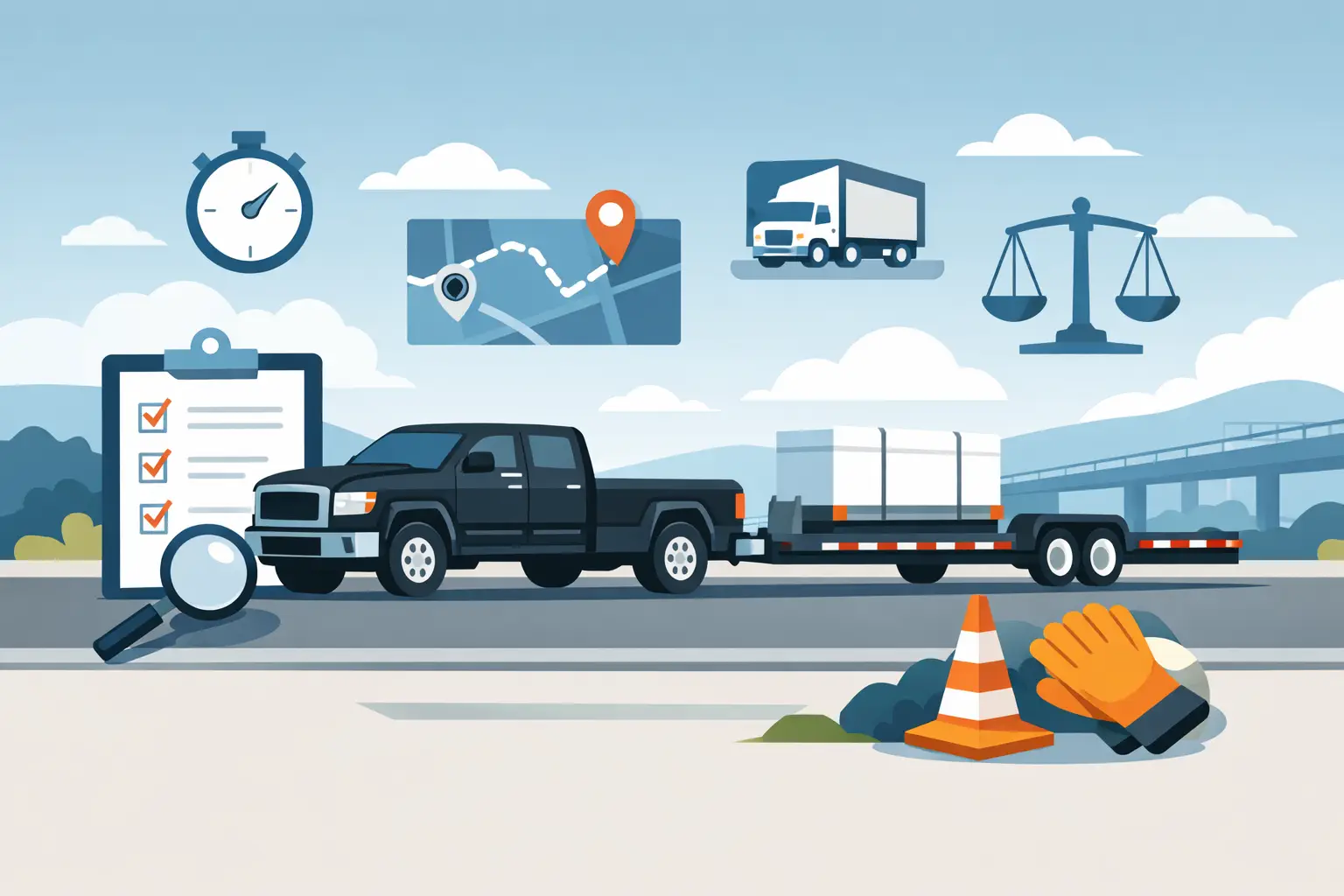
A missed part delivery can idle a crew, push back a shutdown schedule, or turn a routine job into an expensive problem. That is why hot shot hauling requirements matter. If you are booking urgent freight or planning to operate as a hot shot carrier, the requirements are not just paperwork – they directly affect speed, compliance, cargo security, and whether the load gets delivered without disruption.
Hot shot hauling is built for time-sensitive freight that needs to move fast, often on shorter notice than standard truckload shipping. In practice, that usually means a pickup truck or medium-duty truck paired with a flatbed or gooseneck trailer, moving critical commercial freight on a dedicated basis. It is common in industrial, manufacturing, energy, construction, and specialized supply chains where waiting for a standard LTL or scheduled truckload option is not realistic.
What hot shot hauling requirements actually cover
When people ask about hot shot hauling requirements, they usually mean one of two things. They either want to know what a carrier needs in order to legally operate, or they want to know what standards a shipper should expect before handing over an urgent load. Both matter.
On the carrier side, the requirements include licensing, operating authority, vehicle registration, insurance, driver qualification, equipment suitability, weight compliance, and safety procedures. On the shipper side, the real question is whether the carrier has the credentials and operating discipline to move sensitive freight on time and without unnecessary risk.
That distinction matters because not every urgent shipment needs the same setup. A smaller local move may have simpler requirements than a multi-state load going into a secure industrial site. The load, route, weight, trailer type, and delivery environment all change what is required.
CDL and licensing requirements for hot shot hauling
A commercial driver’s license is one of the first issues that comes up, but it depends on weight. In many hot shot operations, a CDL is required when the combined gross vehicle weight rating of the truck and trailer exceeds 26,001 pounds and the trailer itself is rated above 10,000 pounds. If the setup stays below that threshold, a CDL may not be required.
That said, legal minimums are not the whole story. Some shippers, facilities, and job sites prefer or require CDL-qualified drivers even on lighter loads because it signals a higher level of training and operating discipline. If the freight is valuable, time-critical, or moving into a controlled environment, that extra qualification can make a difference.
Beyond the driver license, interstate carriers generally need a USDOT number. If they are hauling regulated freight for hire across state lines, they may also need motor carrier authority. State-level registration and tax requirements can also apply, especially when equipment crosses jurisdictions regularly.
Insurance is not optional and basic coverage may not be enough
Insurance is one of the most important hot shot hauling requirements because urgent freight often involves costly downtime if something goes wrong. At a minimum, carriers typically need commercial auto liability coverage. For-hire carriers also usually need cargo coverage, and many shippers expect limits that match the risk profile of the load.
The problem is that minimum coverage and adequate coverage are not always the same thing. A low-limit policy may satisfy a technical requirement but still leave gaps for higher-value industrial freight, specialized components, or loads heading to regulated facilities. Shippers should verify not just that insurance exists, but that the policy limits, commodity coverage, and equipment listed actually fit the shipment.
In some situations, additional expectations come into play. If a load moves through ports, refineries, airports, or secure sites, access credentials and higher insurance standards may be part of the operating requirement. That is where capability starts to separate serious providers from carriers that simply own a truck and trailer.
Equipment requirements depend on the freight
Hot shot hauling is often treated like a simple equipment category, but the real requirement is equipment fit. The truck must be rated for the load, the trailer must match the freight dimensions and tie-down points, and the securement setup must hold through transit, braking, and road vibration.
A common setup is a one-ton or medium-duty truck with a gooseneck flatbed trailer. That works well for many commercial loads, but not for every shipment. Some freight needs air ride protection. Some needs tarping. Some needs edge protection, chains instead of straps, or a trailer deck length that avoids overhang and loading issues.
Equipment condition matters just as much as equipment type. Tires, brakes, lights, suspension, couplers, and securement gear all need to be inspected and maintained. With expedited freight, there is usually no room for roadside failure. The equipment requirement is simple in theory: the truck and trailer must be legal, safe, and right for the load. In the field, that standard takes discipline to meet consistently.
Securement, weight, and inspection standards
Load securement is one of the most operationally critical hot shot hauling requirements. A load that shifts in transit can damage freight, create a safety hazard, or trigger delivery refusal at the destination. Carriers need the right number and type of tie-downs, proper anchor points, and drivers who understand how to secure the specific commodity being moved.
Weight compliance is equally important. The gross vehicle weight rating, axle ratings, trailer rating, and actual loaded weight all need to align. It is not enough to say a truck can pull the load. The full setup has to remain within legal and equipment limits. Overloading creates safety issues, accelerates wear, and can expose both the carrier and shipper to unnecessary liability.
Pre-trip and post-trip inspections also matter more than many people realize. On urgent loads, the temptation is always to move immediately. Professional operators do not skip the inspection step. A few minutes spent checking tires, connections, lights, securement, and documents can prevent a much bigger delay later.
Driver qualification and safety compliance
A hot shot carrier is only as reliable as the driver assigned to the load. Driver qualification requirements may include a valid license, medical certification where required, a clean enough motor vehicle record, and compliance with applicable safety regulations. If the operation falls under federal motor carrier rules, driver qualification files and hours-of-service compliance may also apply.
This is where urgency creates a real trade-off. Customers need fast response, but fast response cannot mean cutting corners on fatigue, dispatch planning, or documentation. A qualified carrier knows how to move quickly without creating a safety problem to do it.
For some shipments, background credentials matter too. Secure industrial and transportation environments may require TWIC access, TSA-related compliance, or other site-specific clearances. Those are not universal hot shot hauling requirements, but in the right setting they become critical. If a driver cannot enter the facility, the shipment is delayed before unloading even starts.
What shippers should verify before booking a hot shot load
From a shipper’s standpoint, the most useful way to evaluate hot shot hauling requirements is to ask whether the carrier can legally and operationally handle your specific load. That means confirming authority, insurance, equipment type, weight capacity, securement capability, and driver qualifications. If the delivery goes to a refinery, port, airport, or restricted industrial site, site access credentials should be confirmed up front.
It also helps to ask practical questions, not just compliance questions. Can the carrier provide a dedicated truck? Can they meet the pickup window without stacking stops? Do they have the trailer type the freight needs? Can they handle specialized protection if the cargo is vibration-sensitive? Those details determine whether the load arrives on time and intact.
For companies moving critical freight in Houston and beyond, this is where service quality becomes visible fast. Advanced Express Delivery operates in the expedited space where timing, credentials, and equipment readiness are not sales points – they are operating requirements.
The biggest mistake with hot shot hauling requirements
The biggest mistake is assuming hot shot simply means faster truck service. It does not. Hot shot is a specialized operating model for urgent freight, and the requirements behind it are what make that service dependable. When those requirements are met, the shipper gets speed with control. When they are ignored, speed usually disappears at the first inspection issue, equipment problem, or delivery access failure.
If you are selecting a provider, do not just ask if they offer hot shot service. Ask if they meet the actual hot shot hauling requirements for your load, your route, and your delivery environment. That is the difference between a truck showing up and a shipment getting done right.
When freight is tied to uptime, project timing, or a hard delivery window, the right move is to treat compliance and capability as part of the delivery plan, not an afterthought.